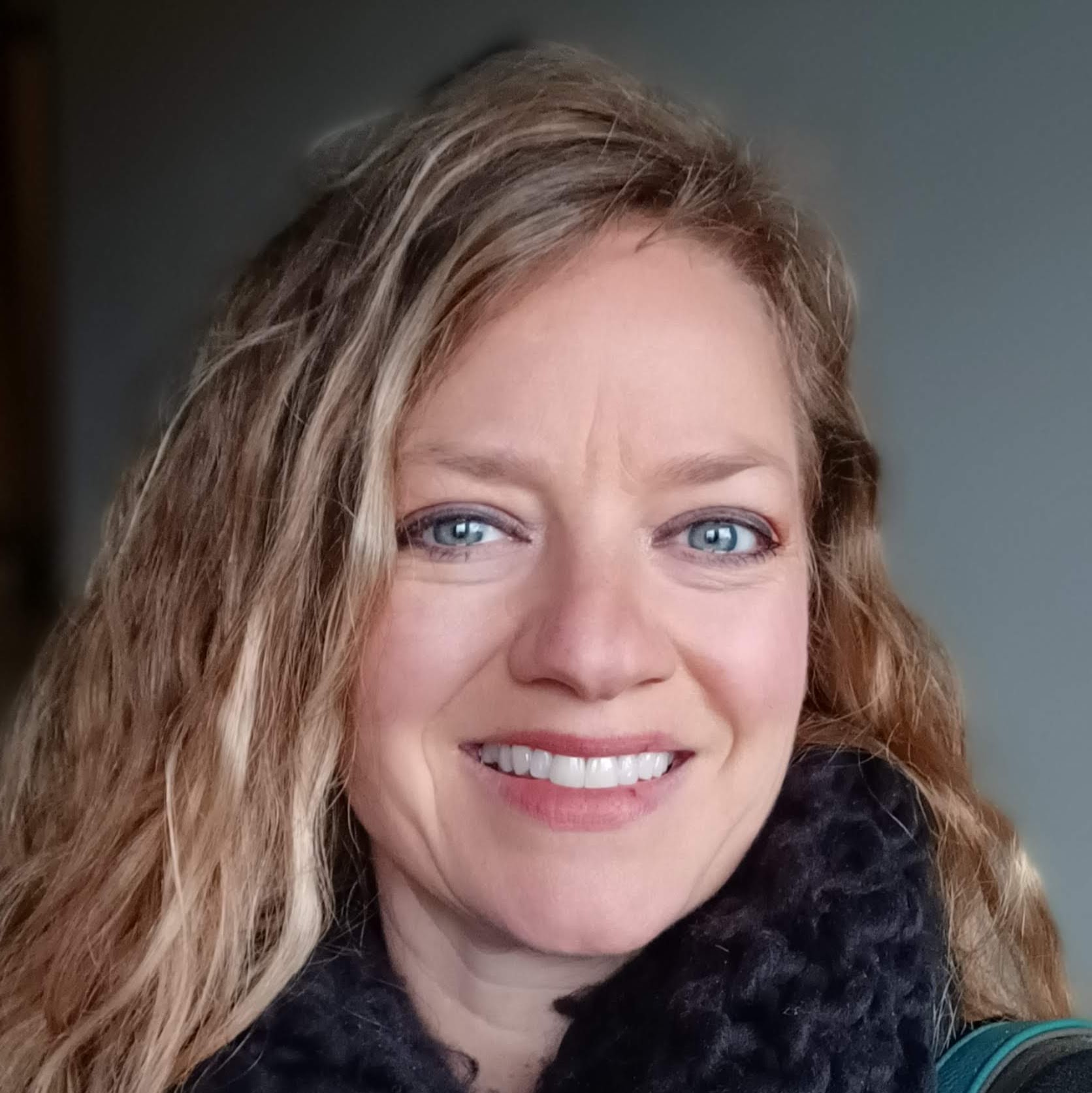
In Memory of Lourdes Ernestina Carroll | November 7, 1948 – December 1, 2025
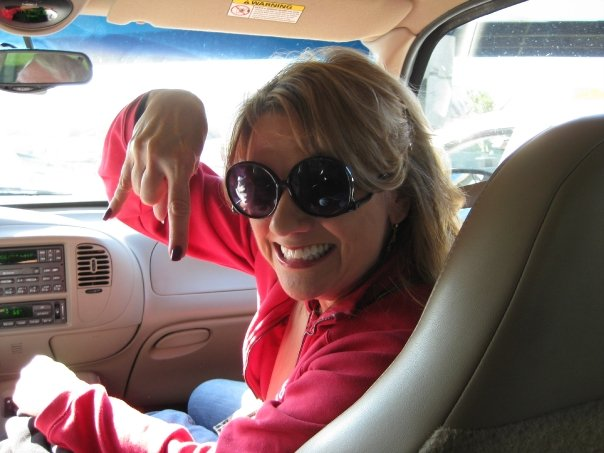
I. The Mystery
Lourdes Ernestina, how you found yourself in Edmond, Oklahoma teaching Spanish to gringos like us mystifies me, though I know more now than I did when you were standing at the front of the classroom with your dry erase markers and your bright red lipstick with matching nails.
You fled Cuba sometime after the revolution in 1953, when you were just a little girl, young enough that the leaving must have been your parents’ decision, not yours. Young enough that you carried Cuba in your body, in the form of language, warmth and stories, but perhaps not enough memory to return to. Your family landed in Boston first, that cold city so far from Havana, where you told me you feared you’d never feel warm again, never go home.
But Boston was brief. Somehow, and here’s where I have to imagine, because I never asked and now I can’t, your family made their way to Oklahoma. Perhaps work brought them, or family already settled. Perhaps it was as random as a map and a finger and someone saying, “There. We’ll try there.” However it happened, you stayed. You graduated from my same high school, Edmond Memorial, around 1966, a full generation before I walked those halls. You went to OU. You met your husband there, I think. You built a life in a place about as far from Cuba as you could get without leaving the continent.
What does it mean for a Cuban girl to finish growing up in Oklahoma? To speak Spanish in a place where Spanish was scarce and precious and marked you as different? To carry the music of the Caribbean, your grandmother’s Castilian seseo, and the rhythms of Havana, into the flatlands of the Great Plains where everyone around you spoke English or was learning textbook Spanish with appalling gringo accents? Me llamo es….1
I think about what it cost you. Not just Cuba itself, which you couldn’t return to for decades. I doubt you went back. But the particular loneliness of exile in a place that couldn’t hold what you’d lost. Oklahoma had no malecón, no hormigas bringing gifts through the windows on Three Kings Day, no community of Cubans keeping the culture alive through food and music and collective memory. You had your family, your stories, and the language you carried in your mouth.
And somehow, out of that displacement, you became a teacher. You stood in front of teenagers in Edmond, Oklahoma and taught them Spanish—not as a dead language to conjugate but as a living thing, a language imbued with wit and warmth and your own infectious joy. You made Spanish feel like home, even to kids who’d never left the state.
That’s what mystifies me, Luly. Not how you ended up in Oklahoma—migration is always some combination of necessity and accident—but how you transformed exile into generosity. How you gave us the gift of your language when you’d lost the place where it belonged.
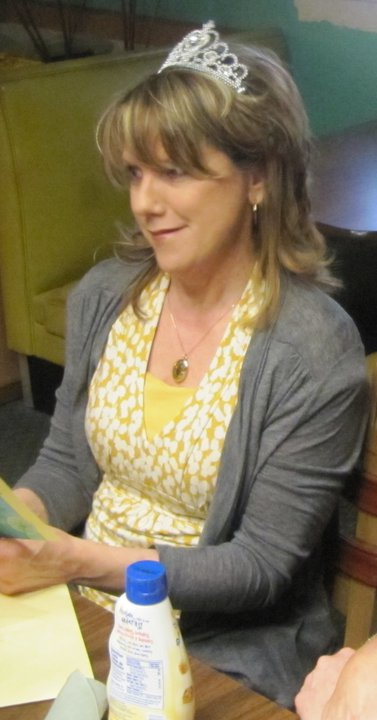
II. The Classroom
You must have wondered when I showed up in my senior year of high school in the fall of 1990, saying I wanted to be president of the Spanish Club. Who was I, and why hadn’t I been in your class before?
The truth was, my junior year had been tumultuous. My grandparents had come to live with us due to declining health, and home was in an uproar. My first boyfriend had broken up with me that spring, and my summer was full of covert rebellion. I was angry at everyone and I stayed that way for the better part of a year.
Part of that anger wanted to reinvent myself. I had grown bored with Spanish, which previously had been so sustaining. Between the family pressures and youthful heartbreak, I had little energy to keep going with anything that had mattered before.
But I missed my old self. And, perhaps most of all, I missed Spanish class.
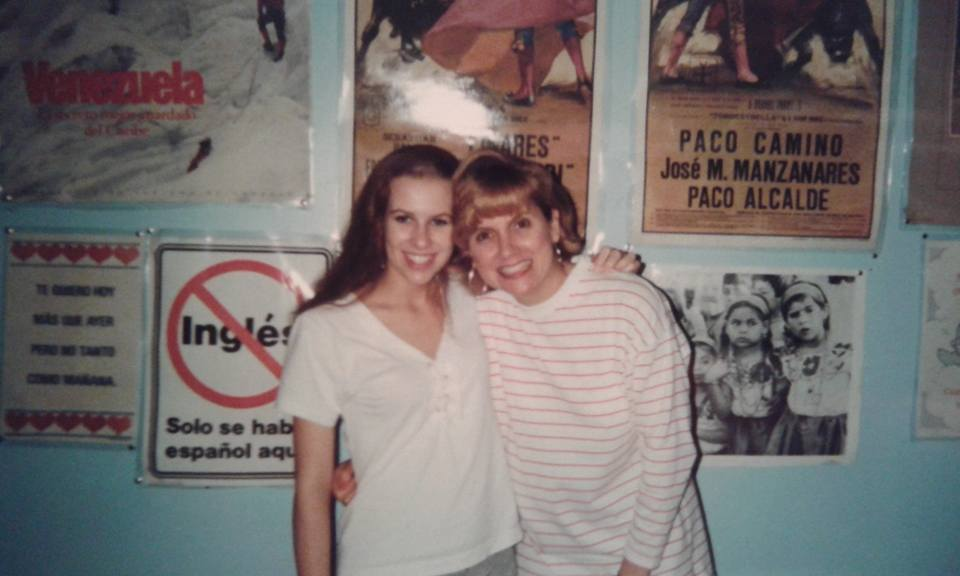
I don’t remember if I went to talk to you about it before I enrolled in Spanish once more. I do remember feeling real trepidation. But from the first day in August 1990 in your classroom, I felt I had come home to one of the best versions of myself.
You showed me how adulting could be fun, joyful and random, even amid sorrow. Your slideshow of the Mayan ruins where you fake-sacrificed your best friend Becky (Mrs. Teague, chemistry) on the stone altar. Your bright red lipstick and easy laugh. The way you found rapport so quickly with students of all stripes. The upside-down paper Santa in a paper chimney that Kelly and I made for your glass showcase—I’m keeping them forever, I can’t make anything like this, you crowed.
You taught me how to read palms (you will have a good husband), how to hold my head up high even with a huge zit next to my eyebrow (it will go away soon). You gave me boy advice about Pancho, who sat close to the door and had been breaking my heart for months (he’ll come round—and he did, a decade later, when it no longer mattered), makeup advice (that Estée Lauder mascara is no good, it crumbles onto your cheek!), and you prayed for me to get into OU.
You loved your son Sean and your husband more than anything, and you kept fresh all those tales of Cuba. I felt like I lived them too.
I knew you had a family, a husband and a son whom you adored, but like most students, I knew them only as names, as the reason you had to leave right after school, as the people whose photos sat on your desk. There is such a rich layer of life underneath every teacher that students never see, but which informs their teaching and shapes the culture of each classroom. What struggles were you carrying? What joys sustained you? What did you go home to each night after a day of conjugating verbs and correcting our terrible pronunciation?
I didn’t know then. I know even less now. But I know you were a loyal and committed mother. I know you loved fiercely. And I know that somehow, all of that love—for your family, for Cuba, for language itself—spilled into the classroom and made us feel seen, held, and possible.
I still can’t believe how quickly you taught us the whole of Spanish grammar, ending with possessive pronouns on a transparency with your looping letters in blue and red dry erase marker: ¡cuyo/cuya! Well, that’s it, class! You now know everything there is possible to know about Spanish grammar!
I took the AP Spanish test and made a 3 and was embarrassed, but you said it didn’t matter—you breathe Spanish anyway, forget about that exam! You had pulled strings for me to complete Spanish III in one semester and skip up to AP Spanish in the spring, with the smart kids. Moniquita ya ha hecho tanto tiempo aprendiendo.
We watched An American Tail for Christmas and you told us stories about Los Reyes Magos and the hormigas that came through the windows of your house in Cuba bearing gifts when you were a little girl. You took me to state Spanish contests and beamed when I took first place and won a little prize of a tape recorder. I still remember I was the first one to finish the exam. You took our class to see Don Juan by Tirso de Molina at UCO even though we understood approximately 5% of it, except for Jenny Harris whose Spanish was better than mine.
You took me and a classmate—whose face I can see but whose name escapes me—to OSU for a Spanish contest in which we recited a dramatic dialogue for the judges. ¡Mi marido se ha resbalado en una cáscara de banana! I made it extra dramatic like you begged me to and the judges were howling. We won a prize!
How I laughed when you cruised through the Stillwater McDonald’s drive-through with me in your car, pretending not to speak English to the person at the window: ¡Necesito salsa! ¡Salsa! ¿Salsa? ¡Ay idiota! As we were eating our French fries in the car you begged us to never do acid because you’d known people at university who tripped and never made it back, as it were, remaining on a permanent trip.
The reason I learned so well with you? You imbued every word and phrase and sentence with your infectious wit and humor. By example you taught me how I could tie words to feelings to actions to summon the right word in the right moment, and in so doing, be understood.
You were, above all, intuitive—and what irony, or not, that a language teacher should intuit so much. Your genuine warmth helped us tether Spanish words to preverbal feeling and reroute them through our speech, our writing, our hearts. We felt that you truly understood us. You never belittled or shamed. Your critique was always offered with genuine kindness and amusement. (“Pancho, are you sure that that is what you mean to say?”) You honored us as people, young and unformed as we were.
This is what formal pedagogy so often misses: language isn’t acquired through memorization and drilling alone. It’s acquired through embodiment, through performance, through tying words to the full spectrum of human emotion—joy, absurdity, drama, even the warning against permanent acid trips in a McDonald’s parking lot. You made us perform language. The fake sacrifice at the Mayan ruins, the drive-through Spanish, the melodramatic dialogue about slipping on a banana peel—these weren’t just fun diversions. They were pedagogy. They taught us that Spanish was a language you could live in, not just conjugate.
This skill fueled years of language learning to come, in Spain, in France, in Italy. If I could tie the words to my emotions in what I felt were the correct parts of my brain (as felt, obviously, not scanned), then I would be on my way to greater language proficiency. Laughter helped, but also tears, frustration, embarrassment, delight. Scholarship supports the emotional-cognitive link for second language acquisition2. But you gave me permission to feel my way into fluency, a huge departure for a student who took such pride in being rational and working hard.
And in fact you taught me so much Spanish that my professor at OU in my first semester held me after class to quiz me: Agotada?3 Who taught you this word? Luly Carroll, I answered proudly, from Cuba. I acquired so much university credit from your class that I was a year ahead on language alone.
The reason I learned so well with you? You imbued every word and phrase and sentence with your infectious wit and humor. By example you taught me how I could tie words to feelings to actions to summon the right word in the right moment, and in so doing, be understood. This skill fueled years of language learning to come, in Spain, in France, in Italy. If I could tie the words to my emotions in what I felt were the correct parts of my brain (as felt, obviously, not scanned), then I would be on my way to greater language proficiency. Laughter helped, but also tears, or frustration.
III. Beyond the Classroom
I sent you a note right after I moved back to Norman in 2004:
No sé si te avisé o no, pero regresé a Oklahoma hace tres semanas. Estoy trabajando como instructora en la OU, impartiendo dos cursos de Español 1115. Todo va bien acá, con algunas dificultades previstas: cambio de carrera, falta de entusiasmo por parte de los estudiantes por el idioma español, mañanas tempranas y una clase nocturna que debo enseñar dos veces por semana. Los aspectos positivos incluyen la ausencia total de la cultura corporativa norteamericana (insoportable), jornadas laborales cortísimas y la excelente compañía de mi novio, Jason, profesor de italiano (otra historia…).4
You responded right away.
Hola, muñeca!! No sabes la gran alegría que me dio recibir tu querida carta!! Me alegra mucho saber que estas de profesora de español en nuestra querida universidad. Sé que eres una gran profesora y que tus estudiantes tienen mucha suerte de tenerte como su maestra de castellano. También me alegra mucho saber que dejaste los negocios particulares. Sinceramente tú no naciste para eso, sino para compartir tu bella personalidad con otras personas. Te felicito!5
We kept in touch over the years. You were always warm, ebullient, cheering.
Cariñito, cuídate mucho, y escribe cuando tengas tiempo. Un beso muy grande, y un abrazote enorme de GRANDE!! Te quiere mucho, Tu eterna amiga, Luly6
I wrote to comment that one of my new colleagues reminded me of you. I invited you to my wedding in 2006.
Comparto una oficina en Kaufman Hall con una profesora cubana jubilada que pertenece al programa de los profesores jubilados – me acuerda de tu madre, si nunca la hubiera conocido. Me encanta su acento y su manera de hablar español, y además su esposo encantador, Ignacio, la espera siempre en su escritorio, leyendo El País – es una pareja muy hermosa. Sabes que Jason y yo nos comprometimos este año, en enero – la boda será en febrero y me gustaría invitarte. Es el 25 de febrero en Norman. ¿Te gustaría ver la boda de la muñeca de tus años como profesora de español en Edmond? 😉 Me encantaría que pudieras venir.7
You responded enthusiastically.
No sabes la gran alegría que me dio recibir tu cariñosa notita. Eres algo genial; tan dulce, imaginativa, singular y preciosa. Estoy muy contenta de que te encanten tus alumnos, y además no me sorprende pues eres una gran profesora. ¡Qué karma la tuya de que nunca te puedas ahuyentar de los cubanos!! ¡ Es tu destino, querido corazoncito! Para mí sería un honor recibir una invitación de una niña a la cual adoro, y siempre querré mucho. Un beso muy grande para los dos, y muchas gracias por recordarme a mi querida madre. Me alegra saber que te está acompañando ahora… 🙂 Luly8
But alas, you were in the grip of the flu – la gripe! – and in the end were not able to be present at our wedding.
Querida Muñequita, Sé que hoy estarás súper ocupada con todo lo que necesitas hacer en este día tan bonito. Lamentablemente no podré asistir a tu bella ceremonia hoy debido a la gripe. Ayer me sentía muy mal, y esperaba una mejoría hoy, pero no ha ocurrido. Aún tengo mucha tos y fiebre. No sabes cómo lo siento, pero aún así, les deseo a ambos un día muy bonito, y lleno de amor. Estaré pensando en los dos. Muchos besos y abrazos (a lo lejos para no contagiarlos).9
I responded:
Todo bien aca, muy ocupada como siempre, pero disfrutando de esta vida bella en la cual que me encuentro con mi principe azul.10
I always felt so at ease with you that I messaged you in one of my darkest moments, after our first miscarriage in 2009, which happened after a year of effort and many more years of wanting.
Intentamos empezar una familia pero eso me ha sido difícil – tuve un aborto espontáneo en abril y aun me siento triste. Si tuviera una tía cubana quien me podría aconsejar!11
You responded almost immediately and at length:
Me da mucha pena saber que perdiste a un bebito. La pérdida de un ser querido siempre es tan dura y tan difícil de superar. La tristeza que ahora sientes es algo muy normal, y que con el tiempo se mejorará, pero nunca se retirara de tu alma, mi Nena. Intenta de nuevo con tu deseo de tener tu familia cuando estés lista, pero siempre recordarás a tu primogénito. Y sabes que eso también es muy normal. No le prestes atención a la gente que te diga que “ya es hora de olvidarse de eso, yada, yada, yada.” Recuerda a tu pequeño siempre.12
Embarrassed somewhat by my own candor, I responded:
Las relaciones norteamericanas son difíciles sobre todo para una que se siente profundamente latina/mediterránea. Debería haber sido católica. besos, moniquinha13
It was a strange confession. I, an Anglo girl from Oklahoma with Finnish and northern European heritage, felt at home in Romance languages and Mediterranean culture. I mourned not being Catholic, not being Latina, not having been born into the warmth I recognized as home the moment I encountered it. I was embarrassed to say it out loud because I knew it made no sense. I thought I had no right to claim it.
But Luly, you were still ready to get in there with me, on any topic, even the hard ones, even the weighty ones, almost two decades after I had been your student:
Cuando yo tenía más o menos tu edad, estaba un poco confundida. No era norteamericana del todo, y tampoco era latina del todo. Ambas culturas se habían formado en una mezcla íntegra en mi. Pensaba que no era ni de una ni de la otra, y no sabía a cual atenerme. Por fin, decidí que yo era una mujer latino-estadounidense…. y por qué no? Tu, como yo, te sientes bien con ambas culturas, y sabes apreciar lo bueno, y despreciar lo malo. Escucha siempre a tu corazón y disfruta de ambas. Te adora, Doña Luly14
What you gave me in those letters was permission—not just comfort, though you gave me that too. You gave me permission to claim what chose me, even if I hadn’t been born to it. You had lived this paradox yourself: No era norteamericana del todo, y tampoco era latina del todo. Neither fully one nor fully the other. You had found a way to live in that in-between space without apology, to be “latino-estadounidense” because ¿por qué no?
When you met me on these shifting shores of adulthood, married but not yet a parent, working but possibly in more of a job than a vocation, once more I felt deeply seen and heard. Your wisdom helped me chart a new path through flexible identities, languages, and lives. You were a living example of the person I could be: joyfully, with goodwill toward a mixed and often confusing world.
You can’t imagine how much these two letters helped me. Or maybe you could. Maybe you knew exactly what you were doing when you wrote them, offering me the same gift that someone must have once offered you: the right to belong to what loves you back, regardless.
I have carried your words with me through every border crossing since. Escucha siempre a tu corazón y disfruta de ambas. Listen always to your heart and enjoy both. That’s what I’ve tried to do. You taught me that it was possible.
IV. España
You traveled to Spain for the first time in 2017 and wrote to me:
Siempre quise ir a la tierra de mis abuelos, Cataluña, y la de mi abuelo materno al norte de España. Mi abuelo materno es de un pueblito pequeñísimo al norte. Se me olvidó el nombre. Era pescador. Estuve por allá en marzo. Me gustó mucho y me sentí como si estuviese en mi casa. Todo el mundo es muy acogedor con nosotros. No tuve tiempo para buscar a los Pons o a los Lostalo ya que había tanto que ver. El guía me dijo que aunque no conocía a los Pons/Lostalo, eran los dos apellidos típicos de Cataluña.15
Siempre quise ir. Always, you had wanted to go. To the land of your paternal grandparents in Catalunya, to the tiny fishing village in the north where your maternal grandfather came from, so small you’d forgotten its name. Cuyo nombre no puedo recordar … as Cervantes famously wrote in his opening lines.16
And in 2017, finally, you went to Iberia.
It must have been a trip for the ages. I can imagine you with your son Sean and his wife, coming through the grief of losing your husband, landing in Spain, knowing that the spirits of your ancestors had walked those same paths, fished off Mediterranean shores, known grief, known loss, as they too emigrated from Spain to Cuba. Why did they leave Spain? What pushed them out and pulled them to the island, where your family didn’t even live for a whole generation before Castro’s revolution sent you into exile again?
We were last in touch in 2017, right before your trip and just after your husband died:
No sé si sabías que perdí a mi esposo el año pasado en septiembre. También por eso voy con mi hijo y su esposa. Para refrescarnos la cabeza un poco. Ha sido un poco difícil. Vamos con grupo turístico. A mí no me gusta preocuparme por nada sino que esos agentes lo arreglen todo, dejándome en una tranquilidad preciosa y disfrutando de vino tinto.17
Para refrescarnos la cabeza un poco. To refresh our heads a little. What tenderness in that understatement. Ha sido un poco difícil. It has been a little difficult. You were so brave to go, Luly. To travel while grieving, to let your son take care of you, to trust a guided tour, only ten days, everything taken care of so you could be in Spain and just breathe.
I tried to jokingly invite myself along, but you gently deflected. This trip was for you and Sean. This trip was about refrescando la cabeza after loss.
Did you feel at home there, the way you wrote that you did? Me sentí como si estuviese en mi casa. Did the faces look familiar to you, the way Finnish faces look familiar to me when I visit—something in the bone structure, the way people hold their mouths, that makes you think, ah, there I am? Did you hear your grandmother’s Castilian lisp in the streets of Catalunya and remember her, suddenly, sharply? Did you stand at the Mediterranean and think of your grandfather, the fisherman from that tiny northern village whose name you’d forgotten, and wonder what drove him to leave?
And did you wonder, even for a moment, at the decades of teaching Spanish without ever setting foot in Spain? You, who had family history and every motive to go? While I, with only a love for the language and a wet spring semester in Santiago, had already claimed it as my own?
How was it possible you’d never been to Spain until 2017? And how perfect that when you finally went, it was after loss, in the company of your son, searching not for the Pons or Lostalo families (though they were there, apellidos típicos de Cataluña), but for something else. Una tranquilidad preciosa. A precious tranquility. A place to rest.
I hope you found it, Luly. I hope Spain held you the way you needed to be held. I hope you drank that red wine and let the tour guide handle everything and felt, for ten days, like you’d come home to a home you’d never known but had been carrying in your body all along.
V. The Lacuna
Seven years passed between 2017 and your death in 2024. Seven years of silence, though not forgetting. Never forgetting.
We had just moved to Italy from Oklahoma in 2016 with our young children; Victor was 5, and Eleanor just two in 2017. I was navigating our new lives here: new schools, new jobs, new language and culture, all questions you would have understood so well. You, who had fled Cuba as a girl and landed in Oklahoma. You, who had built a life in displacement and taught us how to live between worlds. I could have written to you. I should have.
Both sets of our parents came to visit us in 2018. Then 2019 slipped by so quickly and straight into the pandemic in early 2020. Italy didn’t return to “normal” for almost three years. We stayed. We adapted. The children grew. Life happens at the speed it happens when you’re raising small humans in a foreign country, when you’re learning to live in Italian, when every day requires more of you than you knew you had.
We returned as a family to the West Coast in 2022. I went back alone for a week in 2023 for my grandmother’s funeral in Upper Michigan. But I didn’t get back to the US often after I changed to local employment in late 2019. Meanwhile everyone grows older. The people we love age in our absence. Time moves differently when you’re not there to witness it.
I’ve lost people this year whom I thought I would have breathing longer. Long enough for a last conversation, at least. But lives end like a thief in the night. Without warning, without permission, without the goodbye you were sure you’d have time to say.
I never stopped thinking about you. You lived in my heart in the way that all my most important teachers do, the ones who shaped not just what I know but who I became. But it is hard to know where and how to start a message to someone who lives in your heart but with whom you have not spoken in years. And this is from me, a congenital letter writer. What do you say to bridge years of silence? How do you explain that the love remained even as the daily connection faded? That you thought of them often but never quite found the words to reach across the distance?
Can any letter in the world close that gap? First of time, and then to the hereafter.
Maybe I am trying to do that here, now. Maybe this is the letter I should have written in 2018, or 2020, or 2023. Maybe all memorial writing is this: the letter we didn’t send in time, finally written when it’s too late for a reply but necessary anyway. Not for the dead, who are beyond our words now (you might disagree), but for the living who need to say: You mattered. You shaped me. I carry you still.
VI. The Discovery
When I saw a client’s name in the law office in Italy, I thought not of Peggy DeVito, my Spanish teacher in the sixth and seventh grade, but of you. My spidey sense went off and I automatically looked you up and saw that you died two weeks ago in Oklahoma City.
The news landed with a delay that made it stranger. First shock, then guilt, then gratitude for having known you. There is a particular ache in learning of a death after time has already passed and the rituals concluded. No funeral to attend, no line to stand in, no moment to hug a family member and say, she mattered to me too. I loved her. It is disorienting to discover a death not through community, but through Google, at a work desk through a glowing screen.
I am so sorry I did not get to tell you how much you meant to me. The same intuition you recognized and so warmly welcomed led me to the news of your death. I inhaled sharply when I realized you had died just two weeks earlier. I searched for an obituary and found none. Was your middle name really Ernestina? I paused, then remembered your signature clearly at last: Lourdes E. Carroll. Of course.
In whom could I confide how you changed the trajectory of my life? I sat with a woozy, unmoored feeling, distracted at home, flustered at work, on repeat: Luly, gone. Luly, gone.
I hadn’t known you were ill, hadn’t known your strength was ebbing, your English slipping away, the grasp loosening. I did not know the long goodbye had already begun. I only knew, suddenly and too late, that you were no longer in the world. The space you left behind was larger than I had understood.
I am so sorry I did not get to tell you how much you meant to me.
VII. What Remains
There are no words to measure how many lives you touched with your wit, your candor, your openhearted warmth. But there are traces everywhere of what you left behind.
After that crucial leap I made in late high school, I learned to bind emotion to language, not just as a student but as a writer and an adult learner. I let frustration live alongside joy, let tears sit beside stubbornness, and somehow the words begin to gather themselves. Not always. Not cleanly. But I have learned this much: language without feeling beneath it is hollow, inert, impossible to inhabit. Meaning arrives only when emotion is allowed to stay.
I carry your warmth into how I move through the world now, into how I speak to my children, my students, my colleagues, even my husband. I remember the way you met people exactly where they were, without pretense, without hierarchy, with humor and generosity intact. You taught me that identity does not have to resolve into either/or. It can live comfortably as both/and. That belonging is not something to defend. That what others think is, as you liked to say, none of my business.
I still hear your voice reminding me to listen more carefully, to wait, to let someone finish before I rush in. You are there when I pause, when I summon patience, when I choose kindness over cleverness.
The Irish say that death is only the middle of a very long life. Your life continues in all the ways you shaped me and so many others. I will carry you forward. I will be your living memory.
Or, as we would have it in Spanish, Nadie muere de todo mientras haya quien lo recuerde.18
You are always in my heart, Luly.
Te quiero siempre.19
- A classic grammar error for new Spanish students. Iykyk. ↩︎
- Plenty of science on this topic. See:
Damasio, Antonio. Descartes’ Error: Emotion, Reason, and the Human Brain. New York: Putnam, 1994.
Pavlenko, Aneta. Emotions and Multilingualism. Cambridge: Cambridge University Press, 2005. https://doi.org/10.1017/CBO9780511784034.
Immordino-Yang, Mary Helen, and Antonio Damasio. “We Feel, Therefore We Learn: The Relevance of Affective and Social Neuroscience to Education.” Mind, Brain, and Education 1, no. 1 (2007): 3–10. https://doi.org/10.1111/j.1751-228X.2007.00004.x ↩︎ - Exhausted, from gota, “drop,” literally “down to my last drop [of energy].” ↩︎
- I don’t know if I told you or not, but I moved back to Oklahoma three weeks ago. I’m working as an instructor at OU, teaching two Spanish 1115 courses. Everything is going well here, with a few expected difficulties: career change, lack of enthusiasm on the part of students for the Spanish language, early mornings, and an evening class that I have to teach twice a week. The positives include the total absence of American corporate culture (unbearable), very short working hours, and the excellent company of my boyfriend, Jason, an Italian professor (another story…). ↩︎
- Hello, muñeca! You have no idea how happy I was to receive your lovely letter! I’m so glad to hear that you’re teaching Spanish at our beloved university. I know you’re a great teacher and that your students are very lucky to have you as their Spanish teacher. I’m also very happy to hear that you left the private business world. Honestly, you weren’t born for that, but rather to share your beautiful personality with others. Congratulations! ↩︎
- Sweetheart, take good care of yourself, and write when you have time. A big kiss and a huge hug! Love you lots, Your eternal friend. ↩︎
- I share an office at Kaufman Hall with a retired Cuban professor who belongs to the retired professors program—she reminds me of your mother, if I had ever met her. I love her accent and the way she speaks Spanish, and her charming husband, Ignacio, always waits for her at her desk, reading El País—they are a beautiful couple. You know that Jason and I got engaged this year, in January—the wedding will be in February, and I would like to invite you. It’s on February 25 in Norman. Would you like to see the wedding? You know that Jason and I got engaged this year, in January—the wedding will be in February, and I would like to invite you. It’s on February 25 in Norman. Would you like to see the wedding of the doll from your years as a Spanish teacher in Edmond? I would love for you to come. ↩︎
- You don’t know how happy I was to receive your sweet little note. You are wonderful; so sweet, imaginative, unique, and precious. I am very happy that you love your students, and I am not surprised because you are a great teacher. What karma you have that you can never get away from Cubans! It’s your destiny, my dear sweetheart! It would be an honor for me to receive an invitation from a girl whom I adore and will always love dearly. A big kiss for both of you, and thank you so much for reminding me of my dear mother. I’m glad to know that she is with you now… 🙂 ↩︎
- Dear Muñequita, I know you’ll be super busy today with everything you need to do on this beautiful day. Unfortunately, I won’t be able to attend your beautiful ceremony today because I have the flu. Yesterday I felt very ill, and I was hoping to feel better today, but that hasn’t happened. I still have a bad cough and fever. You don’t know how sorry I am, but even so, I wish you both a very beautiful day, full of love. I’ll be thinking of you both. Lots of kisses and hugs (from a distance so I don’t infect you). ↩︎
- Everything is fine here, very busy as always, but enjoying this beautiful life in which I find myself with my Prince Charming. 🙂
↩︎ - We are trying to start a family, but it has been difficult for me—I had a miscarriage in April and I still feel sad. If only I had a Cuban aunt who could give me advice! ↩︎
- I am so sorry to hear that you lost a baby. The loss of a loved one is always so hard and difficult to overcome. The sadness you feel now is very normal, and it will get better with time, but it will never leave your soul, my dear. Try again with your desire to have a family when you’re ready, but you will always remember your firstborn. And you know that’s also very normal. Don’t pay attention to people who tell you, “It’s time to forget about it, yada, yada, yada.” Remember your little one always. ↩︎
- American relationships are difficult, especially for someone who feels deeply Latin/Mediterranean. I should have been Catholic. Kisses, Moniquinha ↩︎
- When I was about your age, I was a little confused. I wasn’t entirely American, and I wasn’t entirely Latin American either. Both cultures had blended together completely within me. I thought I wasn’t one or the other, and I didn’t know which to stick with. Finally, I decided that I was a Latin American woman… and why not? Like me, you feel comfortable with both cultures, and you know how to appreciate the good and reject the bad. Always listen to your heart and enjoy both. I adore you, Doña Luly ↩︎
- I always wanted to visit the homeland of my grandparents, Catalonia, and that of my maternal grandfather in northern Spain. My maternal grandfather is from a tiny village in the north. I forgot the name. He was a fisherman. I was there in March. I really liked it and felt right at home. Everyone was very welcoming to us. I didn’t have time to look for the Pons or the Lostalos because there was so much to see. The guide told me that although he didn’t know the Pons/Lostalos, they were two typical Catalan surnames. ↩︎
- The opening line of Don Quijote de la Mancha in the original Spanish is «En un lugar de la Mancha, de cuyo nombre no quiero acordarme…» ↩︎
- I don’t know if you knew that I lost my husband last September. That’s also why I’m going with my son and his wife. To clear our heads a little. It’s been a bit difficult. We’re going with a tour group. I don’t like to worry about anything, I prefer to let the agents arrange everything, leaving me in a state of blissful tranquility, enjoying red wine. ↩︎
- No one dies completely as long as someone remembers them. ↩︎
- Love always. ↩︎
One Response
Profound and beautiful.